
Japanese Cemetery, Broome
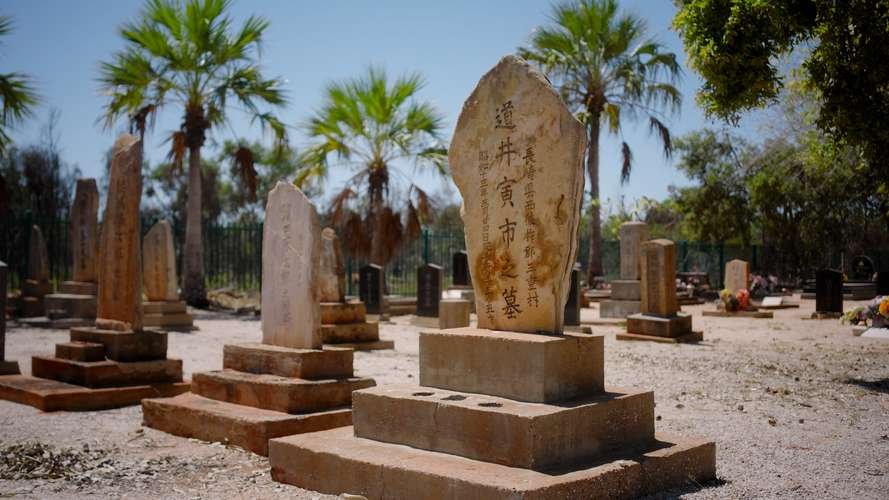
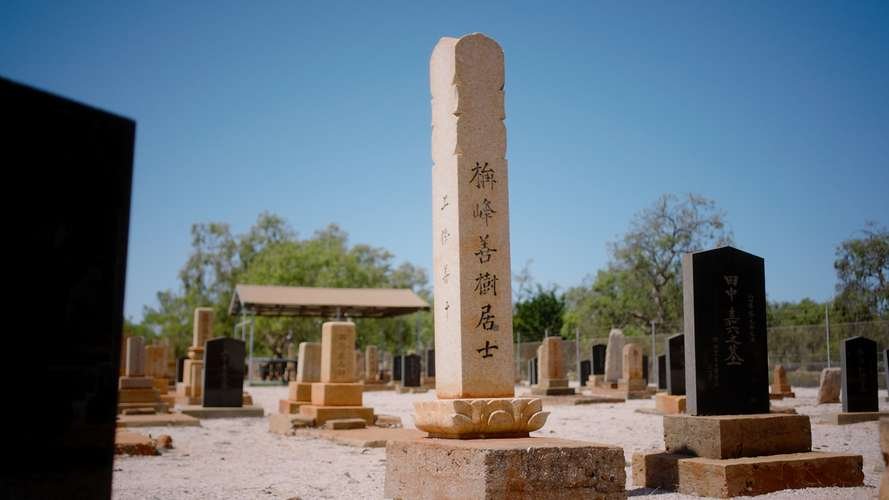
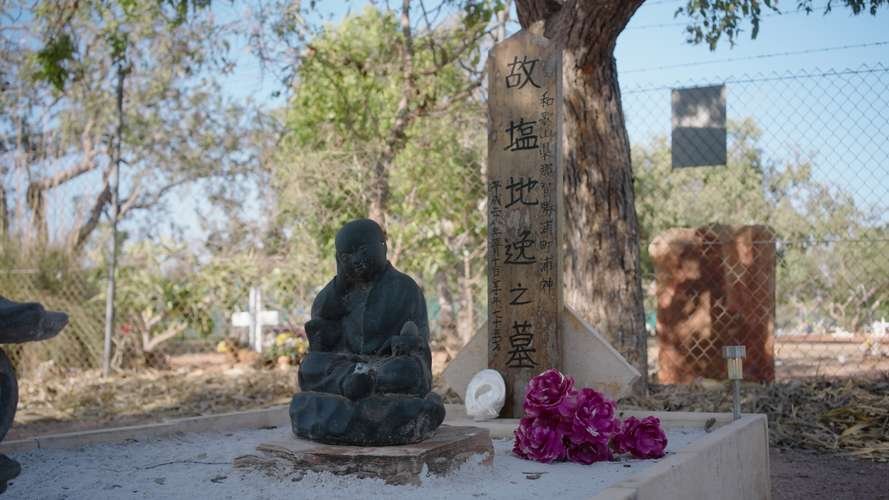
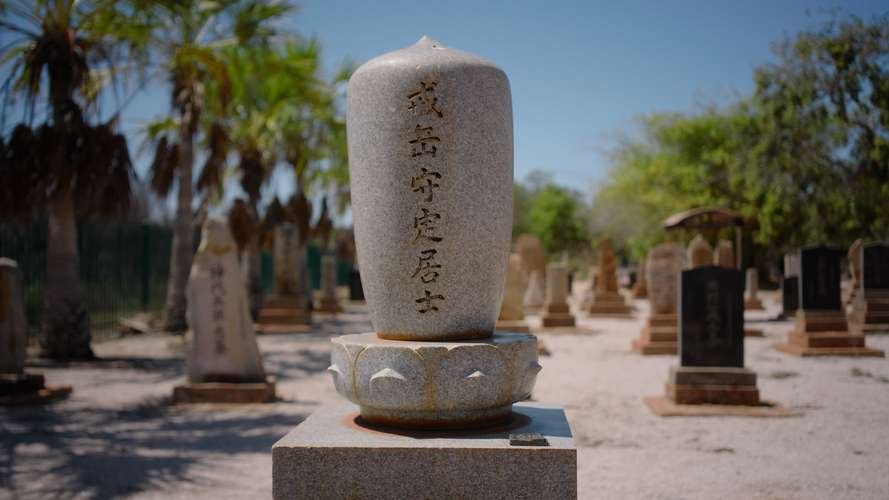
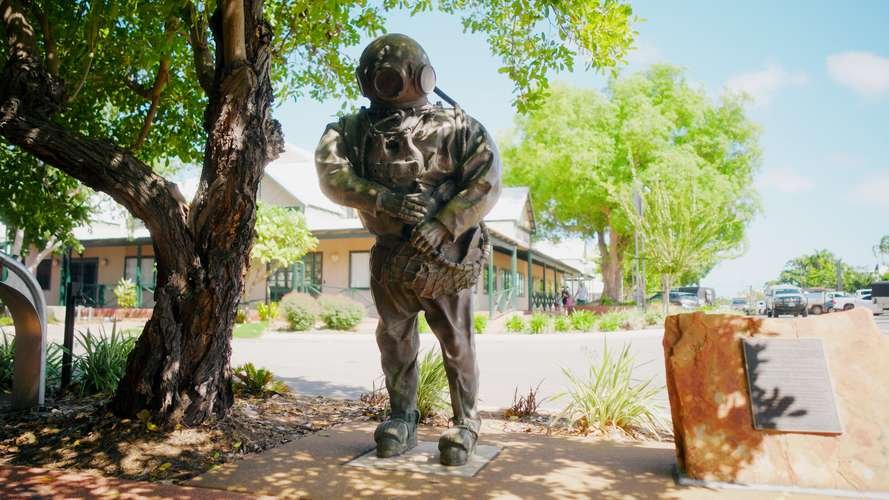
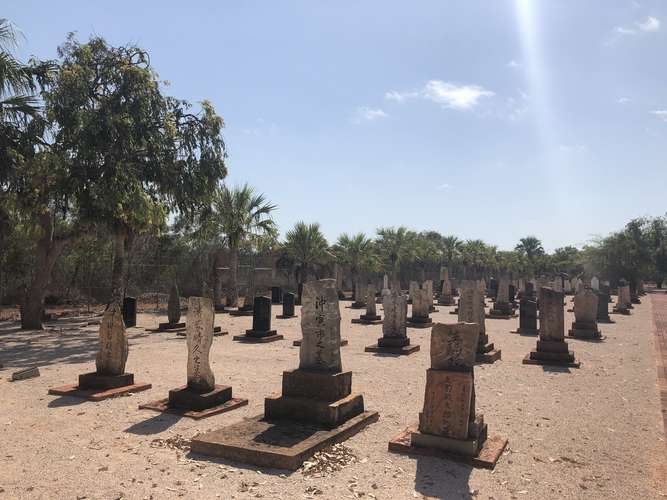
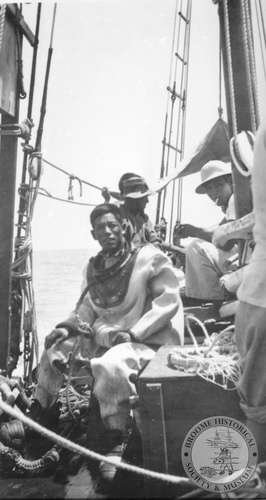
The Japanese Cemetery in Broome has over 700 tombstones of pearl divers, women and children, who lived in Broome at the height of its pearling industry in the late 1900s. Most of the divers came from the coastal Wakayama prefecture, seeking a more prosperous life, but the conditions were dangerous and around 30% perished at sea from decompression sickness, drowning, disease or cyclones. There are also adjacent Aboriginal, Chinese and Muslim sections of the Cemetery, dating back to the late-1900s, reflecting Broome’s pearling multicultural history.1
Broome had a sizable Japanese population at this time, of divers and pearling merchants, as well as Japanese sex workers. There was a Japanese quarter with a Japanese Club, hospital and school. The Japanese community held many cultural events, including sumo wrestling tournaments, and the annual Buddhist O-Bon Matsuri (Festival for the Ancestors), still commemorated to this day. The Japanese in Australia did not build temples, but they did have shrines in shops and homes including Buddhist prayer books, deities and symbols.2
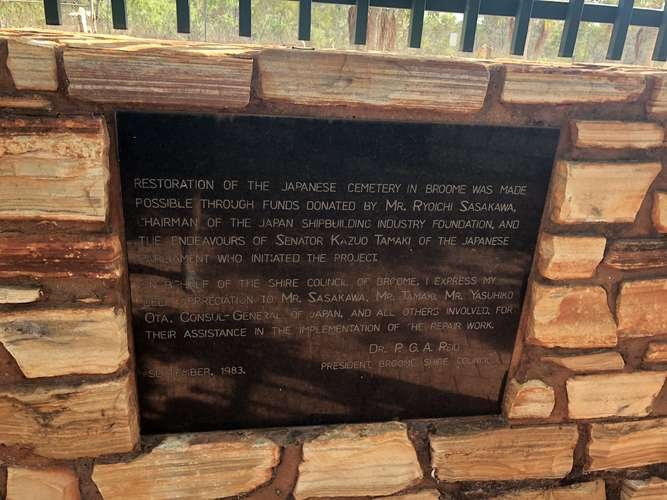
The Japanese Cemetery’s local sandstone graves were restored by a generous donation from the Chairman of the Japanese Shipbuilding Industry Foundation in 1983.3 There is a sizeable Japanese Cemetery on Thursday Island, of over 700 graves, also dating back to the late-1990s.
By: Anna Halafoff and Sue Smith
References:
1 Western Australian Museum and Nyamba Buru Yawuru, Lustre: Pearling and Australia (Western Australian Museum, 2018); “Broome’s Japanese and Chinese Cemeteries,” Broome Visitor Centre, accessed May 19, 2026, https://www.visitbroome.com.au/activities/japanesecemetarybroome.
2 “Japanese Divers in Broome,” National Museum of Australia, accessed May 19, 2026, https://www.nma.gov.au/defining-moments/resources/japanese-divers-broome; Anna Halafoff, Sue Smith and Hannah Gould, “Tales from the Other Australia: Lanterns For the Dead, and the Persistence of Buddhism in the Far North,” ABC, accessed June 5, 2026, https://www.abc.net.au/religion/shinju-matsuri-festival-and-history-of-buddhism-in-far-north/102818862.
3 Halafoff et al. “Tales from the Other Australia.”