
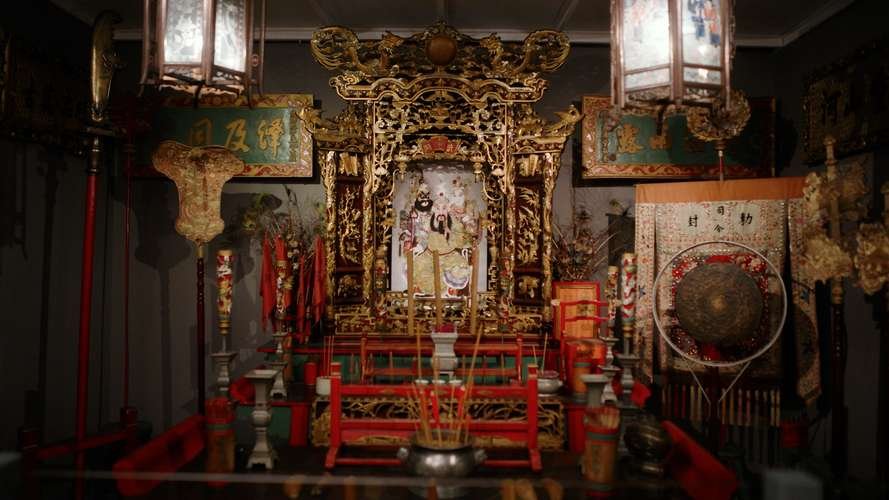
Guan Di Temple at the Queen Victoria Museum and Art Gallery, Launceston
Six Chinese temples, known then as “joss houses”, were built during the peak of the tin-mining boom in Northeast Tasmania in the 1880s, in Weldborough, Garibaldi, Moorina, Gladstone, Branxholm, and Lefroy. The original temples were small timber buildings with corrugated iron roofs and a front verandah serving as a portico and aligned on a north–south axis. As the tin mines became exhausted and the Chinese population declined, the temples were gradually abandoned, and important artefacts from the smaller temples were transferred to the temple at Weldborough.1
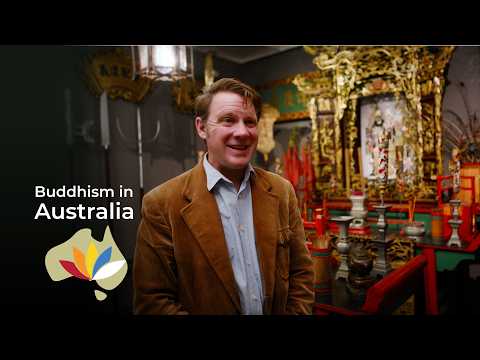
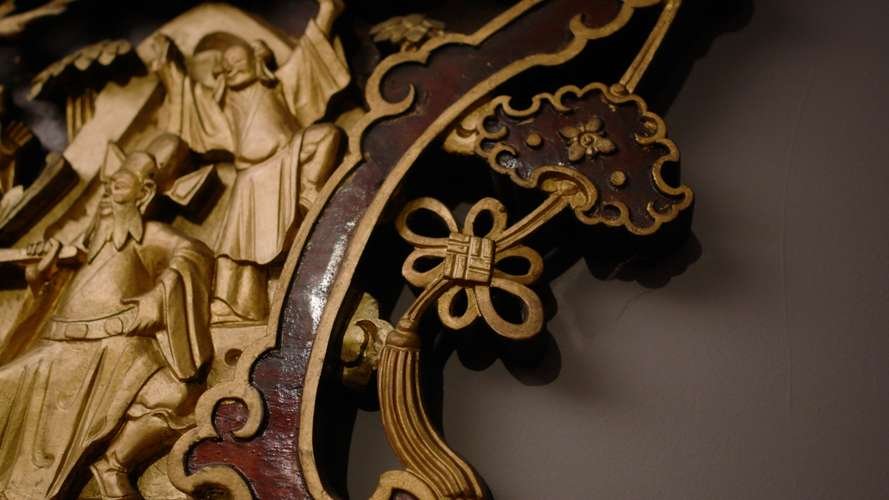
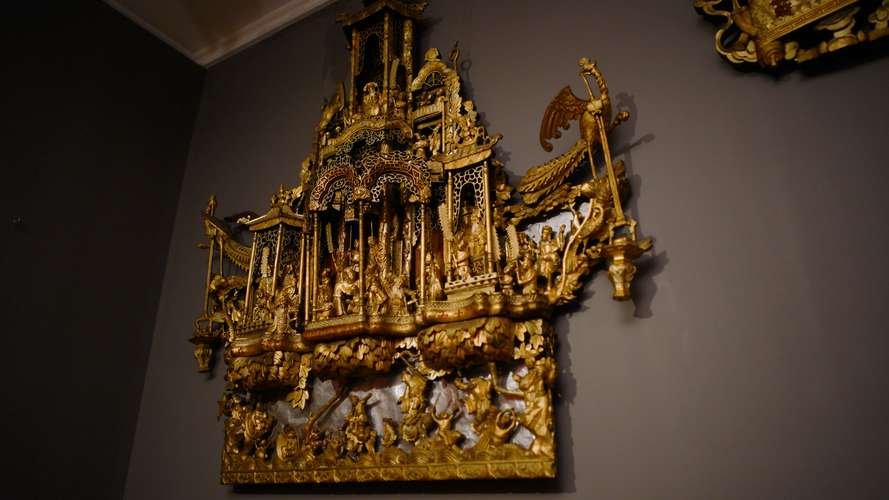
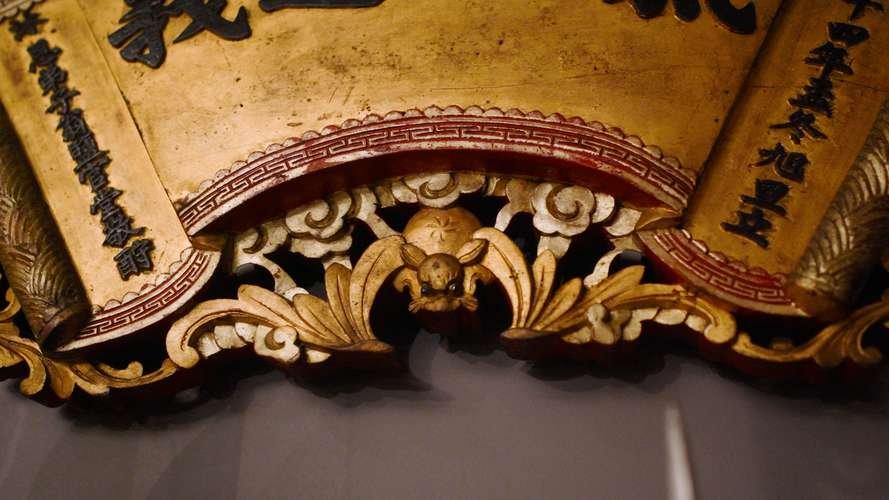
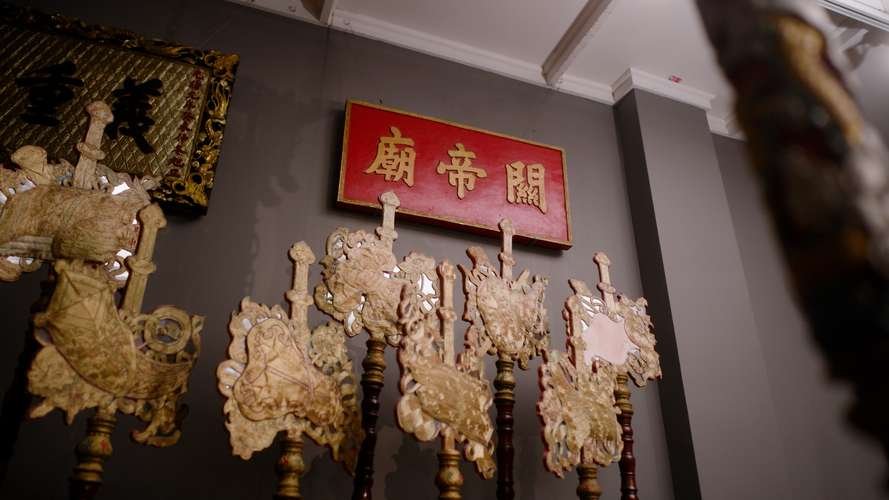
In 1934, the Weldborough temple closed, and its custodian, Jee Harm (余文沾/余文霑, Yu Wen Zhan), donated the temple’s artefact collection to the Queen Victoria Museum and Art Gallery (QVMAG) in Launceston. The present Guan Di Temple at QVMAG is both a museum exhibit and a functioning temple for the Chinese community. Its collection includes carved and painted plaques, incense burners, textile banners, large ceremonial floats, and ritual weapons, most of which date from the 1880s. 2 Several artefacts also feature motifs shared by Buddhist and Daoist traditions, including the endless knot and the auspicious bat.
Like the present Guan Di Temple at QVMAG, all six Chinese temples established in Northeast Tasmania during the 1880s were dedicated primarily to Guan Di (关帝/ 關帝 Guāndì). 3 Also known as Guan Yu, Guan Gong, or Kwan Ti, Guan Di is a revered deity in Chinese religious traditions and is regarded in Buddhism as a Dharma Protector. In addition to offering protection from evil spirits and wars, Guan Di embodies the virtues of loyalty, righteousness, and brotherhood. These qualities held particular significance for Chinese miners, who lived far from home and relied heavily on fellow miners, often speaking the same dialect and sharing common religious traditions, for mutual support and solidarity.
By: Sioh Yang Tan and Anna Halafoff

References:
1 “Guan Di Temple,” Queen Victoria Museum & Art Gallery, accessed August 6, 2026, https://www.qvmag.tas.gov.au/Whats-on/Art-Gallery-at-Royal-Park/Guan-Di-Temple; Helen Vivian, “Tasmania’s Chinese Heritage: An Historical Record of Chinese Sites in North East Tasmania,”, (Master’s thesis, University of Tasmania, 1985), https://eprints.utas.edu.au/17370/.
2 Jon Addison, “Guan Di and Tin Mountain: Chinese Temples in Northeast Tasmania,” The Newsletter 71 (Summer 2015): 56–57.
3 “Chinese temples in 19th-century Tasmania”, ABC Education, accessed August 6, 2026, https://www.abc.net.au/education/chinese-temples-in-19th-century-tasmania/13624928.