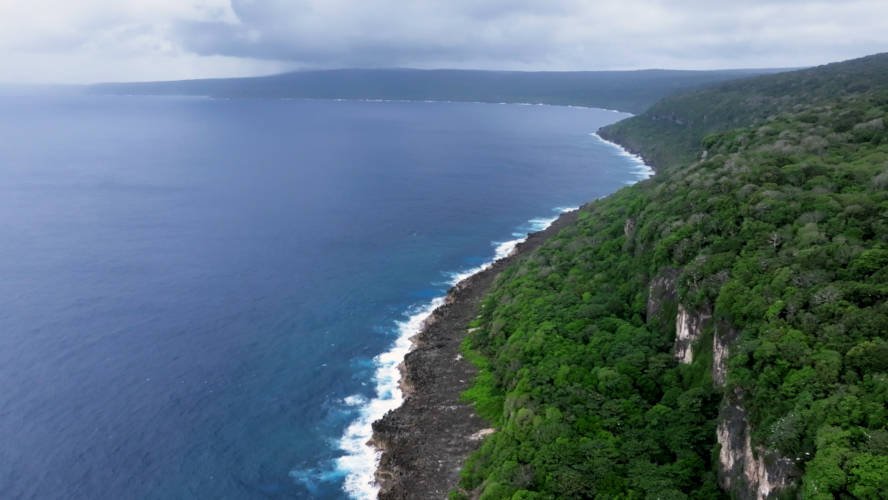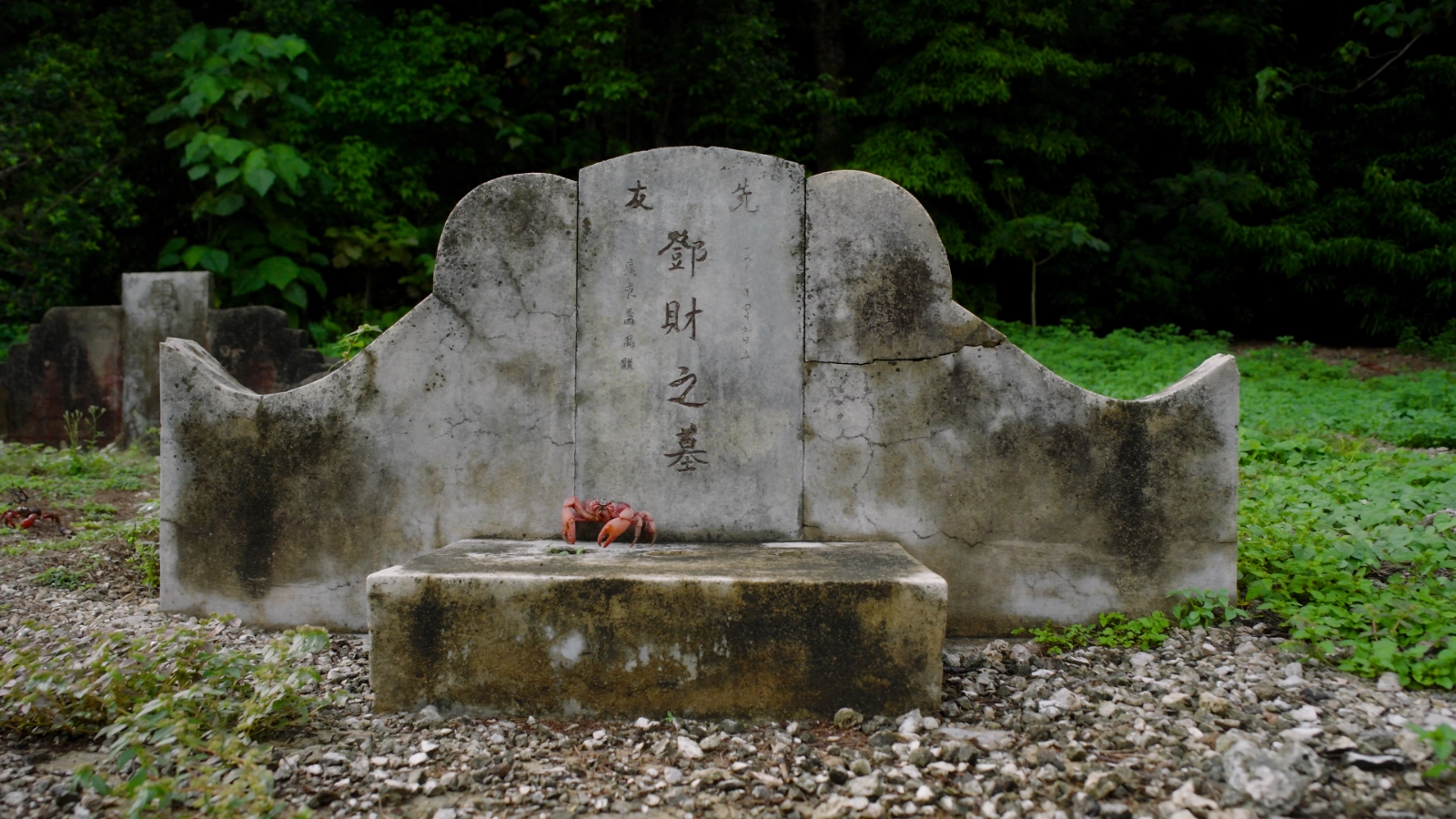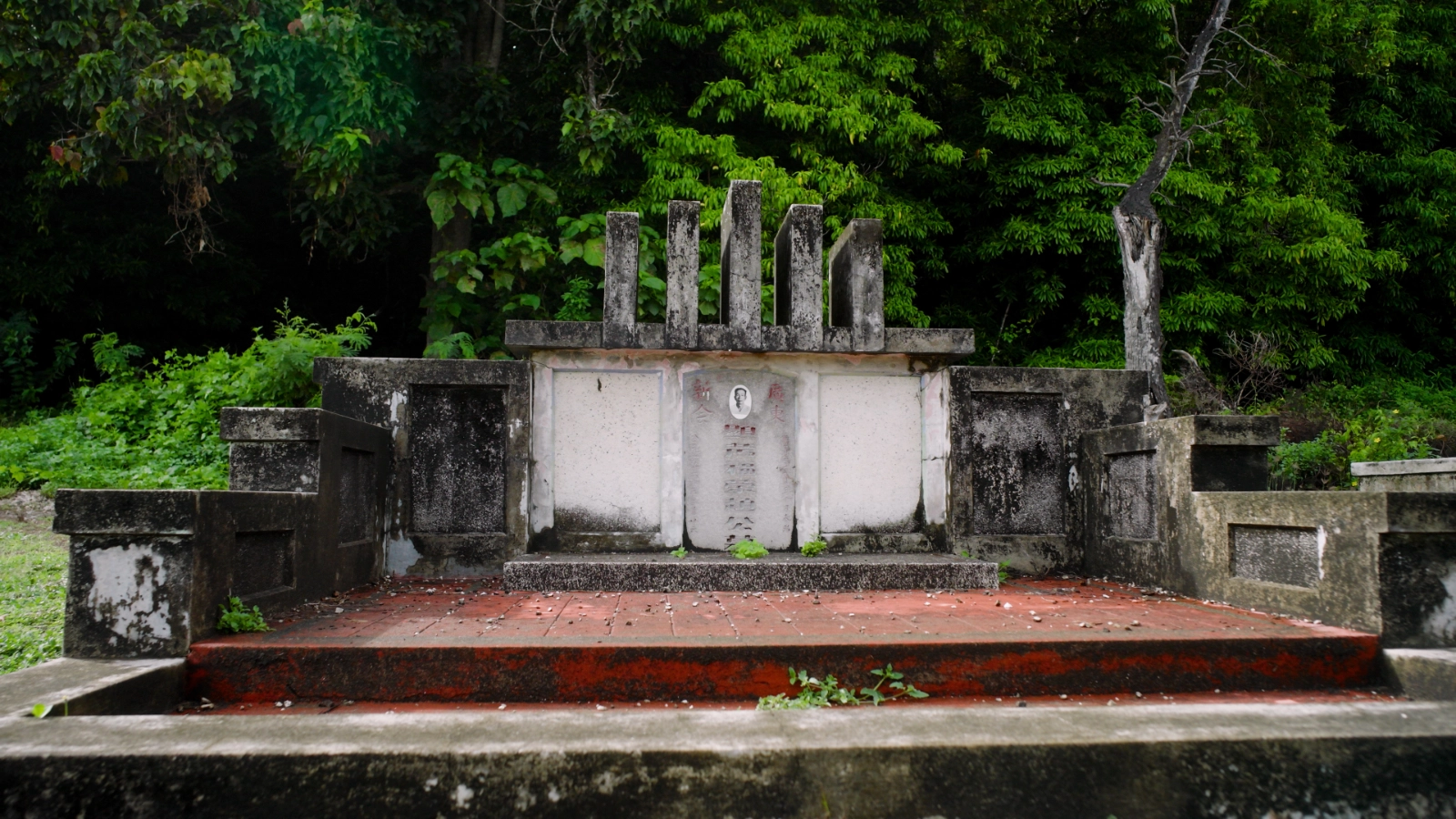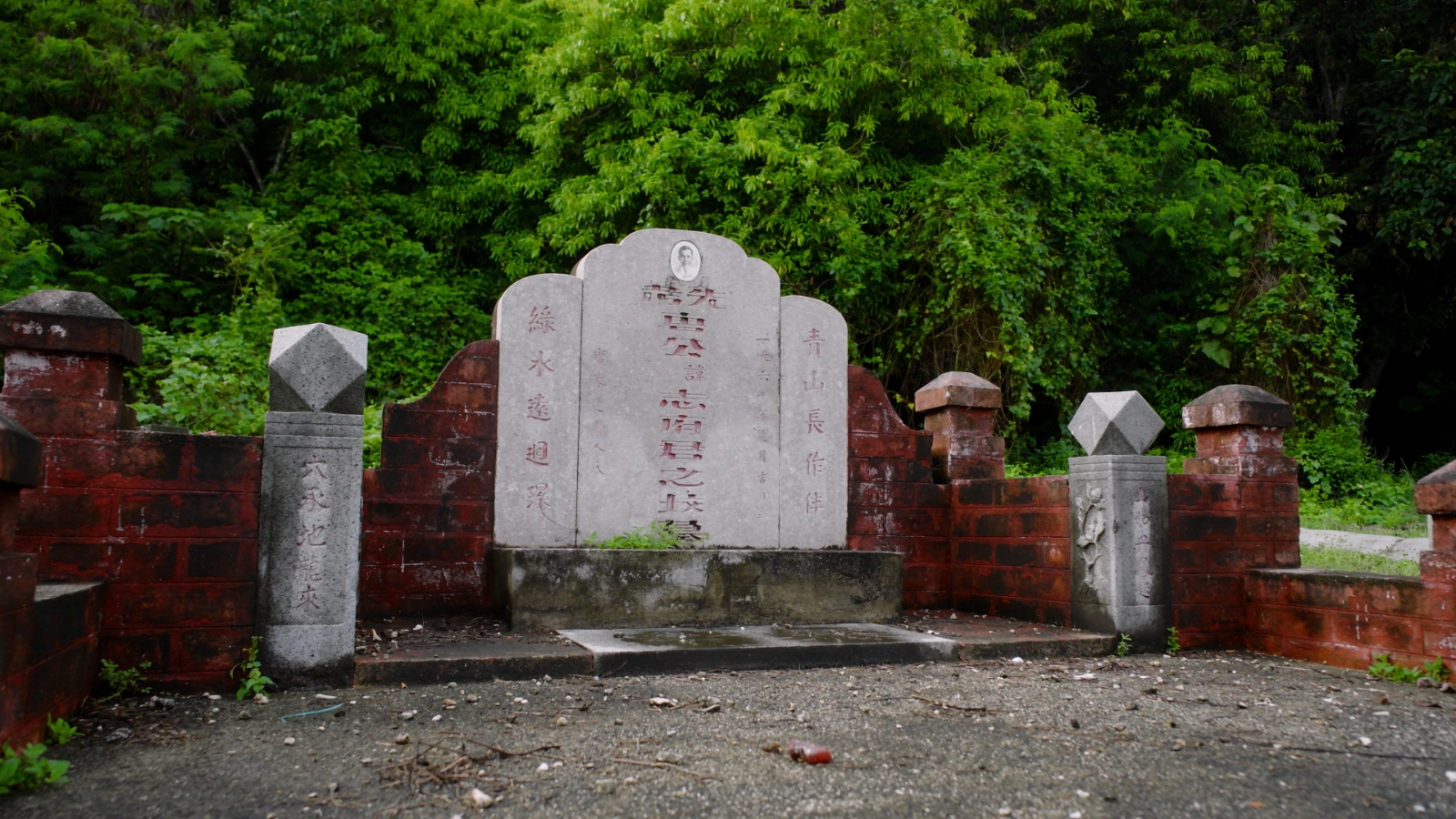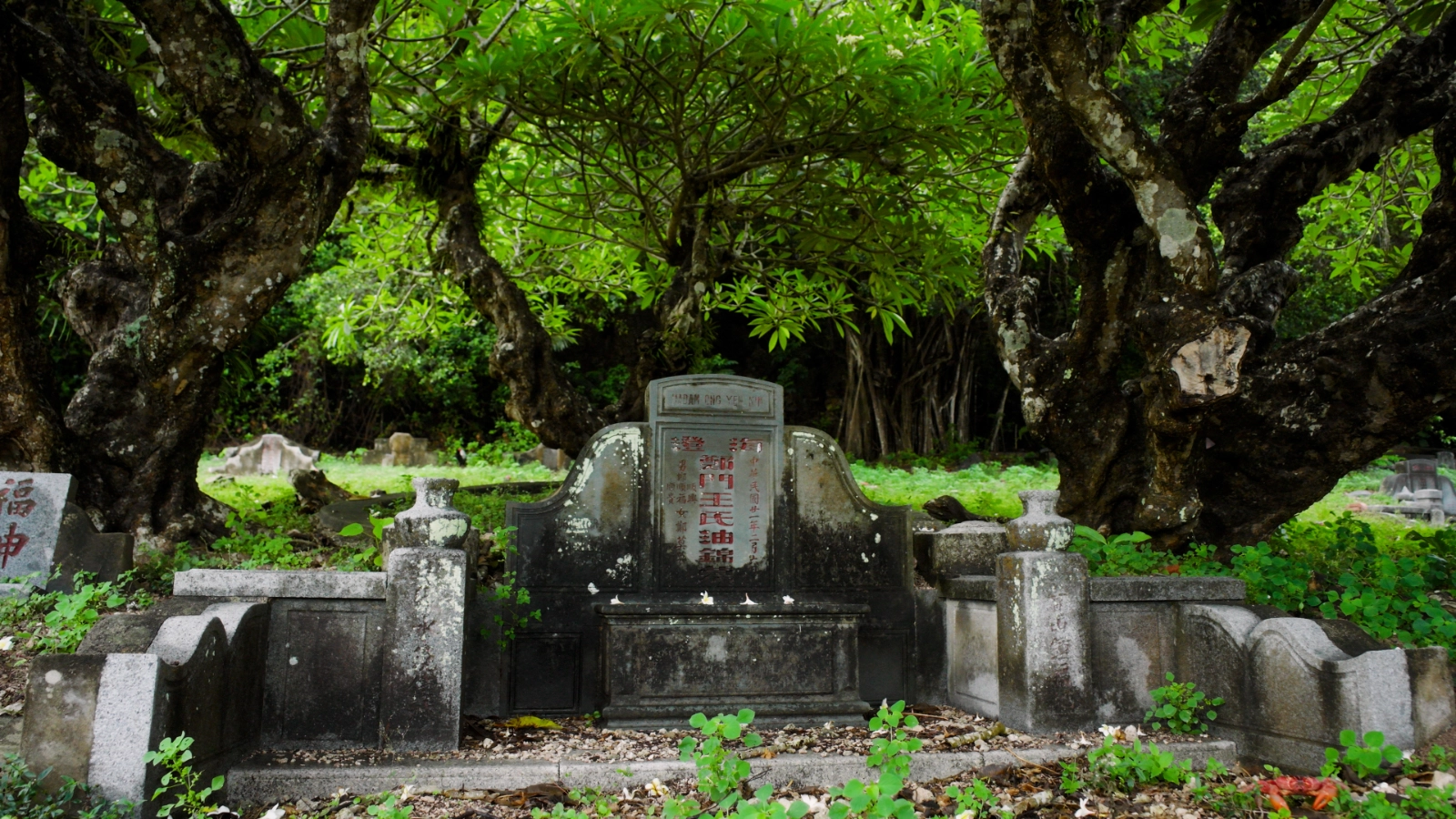
The Settlement Chinese Cemetery on Christmas Island
Chinese indentured labourers, mainly from Guangdong, China, began to arrive on Christmas Island in 1899 to mine for phosphate. These men brought their religious traditions with them, establishing temples, shrines and cemeteries across the Island. Life as a miner was tough, and many perished in accidents or from the disease beri-beri, due to poor nutrition. Wealthier Chinese overseers and business persons were also buried on the Island, in more elaborate graves. Funerary rites held special significance for them all.1
The syncretic combination of Daoist, Buddhist, Confucian and folk spiritualities from China is evident in the Chinese section of the cemetery in Settlement on Christmas Island. Its serenity can be attributed to the area being constructed according to feng shui principles, that place tombstones between trees, against the backdrop of rocks, and looking outwards to the sea. Many tombstones reference gods and symbols of earth, heaven, health, and prosperity, and many also display Buddhist symbolism, such as lotus motifs, the guardian Guan Yin and banyan trees. Buddhist elements were also incorporated into funerals, such as prayers for fortunate rebirth, and in annual festivals, such as Qing Ming (Festival for the Dead) and the Hungry Ghost Festival. There is also another Chinese cemetery in Phosphate Hill.2
By: Sue Smith and Anna Halafoff
References:
1 Helene Catherine Bartleson, Golden Leaves: An Introduction to the Chinese Cemeteries of Christmas Island (BooBook Editions, 2008); National Trust of Western Australia, Temples and Shrines of Christmas Island (National Trust of Western Australia, 2016), https://christmasislandheritageblog.wordpress.com/wp-content/uploads/2016/09/temples-shrines-final-reduced.pdf; Anna Halafoff, Juewei Shi, and Sue Smith, “Red Crabs and Rediscovering the Chinese Religions of Christmas Island,” ABC Religion and Ethics, accessed November 12, 2023, https://www.abc.net.au/religion/red-crabs-and-rediscovering-chinese-religions-christmas-island/106001656.
2 Bartleson, Golden Leaves.