
Cooktown Cemetery Chinese Shrine
Cooktown had a sizable Chinese population, at the height of the Palmer River Gold Rush in the late 1800s.1
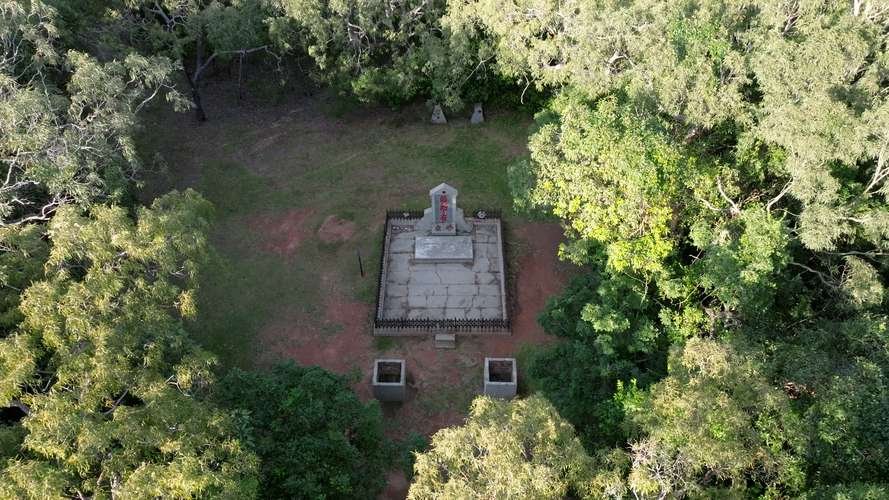
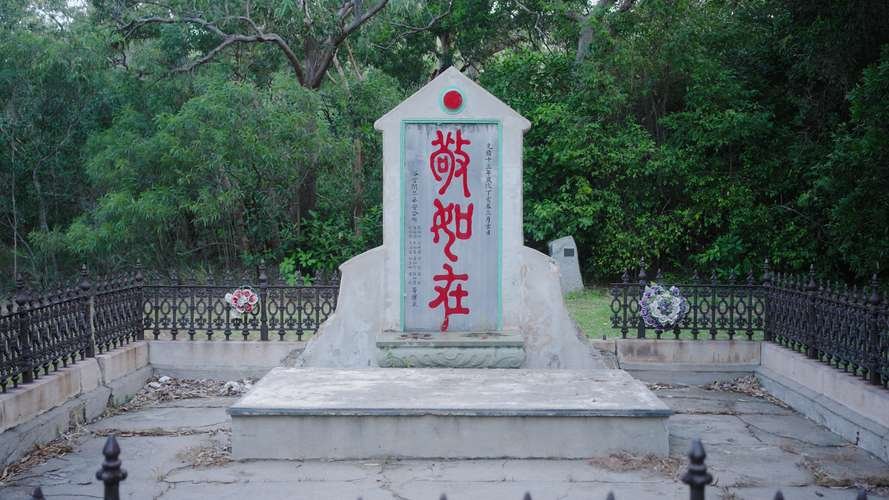
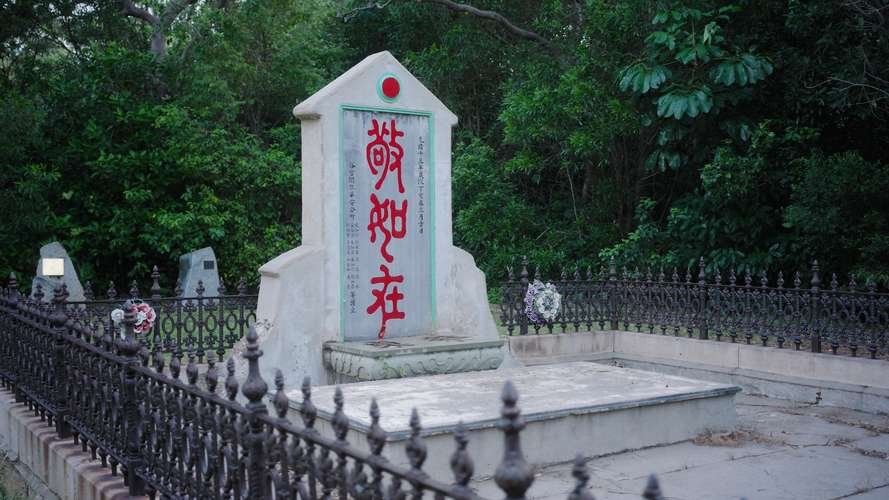
Life was tough for these miners, and the largest Chinese Cemetery Shrine in Australia was built Cooktown in 1887. Over 300 Chinese persons were buried in the Chinese section of the cemetery between 1873–1920, with many later exhumed and returned to China. The Shrine is inscribed with three characters ‘Tjin Ju Tsai’ (敬如在 jìng rú zài) which mean: ‘Respect the dead as if they were present.’ The Shrine also has two, approximately meter-squared, ‘burning towers… used to make offerings to the spirits’ of ‘food and temple “money” to ensure a smooth transition to the life beyond.’2
A smaller stone monument placed ‘over the remains of an unknown Chinese person, whose bones were found on the Palmer River Goldfields,’ is also dedicated to the ‘thousands of Chinese people buried on the goldfields of Cape York Peninsula, most of whom still lie forgotten in the bush.’3
Cooktown also had two Chinese temples, and market gardens. There were many Far North Chinese Temples, including at the nearby Palmer River settlement, and in Cairns, Port Douglas, Atherton, Herberton, Innisfail and Townsville.4
By: Anna Halafoff and Sioh Yang Tan
References:
1 Bev Shay and John Shay, The Chinese on the Goldfields (The Cooktown Historical Society n.d.); Gordon Grimwade, “Worshiping the North: Early Chinese Temples in Mainland Tropical Australia,” International Journal of Historical Archaeology 29 (2025): 491–527.
2 Explanatory sign, Chinese Shrine, Cooktown Cemetery.
3 Plaque on the Cooktown Cemetery stone monument to the Chinese people buried on the goldfields of Cape York Peninsula.
4 Grimwade, “Worshiping the North”; Jack Forster Waltham, Chinese Temples of Australia (Flinders University, 2014).