
Australian Sangha Association
Founded in 2005, the Australian Sangha Association (ASA) is the peak national body representing Buddhist monastics from all traditions. Its objectives are to maintain communication and connection, and to promote understanding and harmony within the Buddhist monastic community nationwide.1
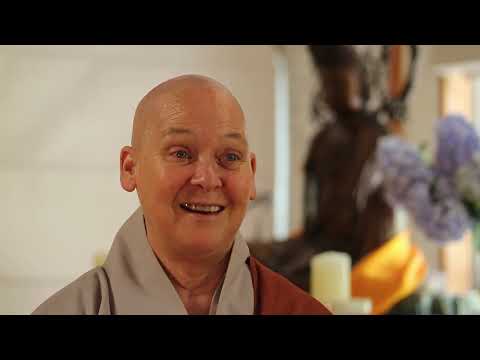
The idea of forming a national Sangha Association was raised by Eric Liao with Venerable Chi Kwang Sunim and Graeme Lyall in 1986. Graeme Lyall and Venerable Chi Kwang subsequently met with monastics from different traditions and cultural backgrounds in Sydney and found considerable interest. A committee was formed, and a constitution was drafted by Venerable Khantipalo.
On the initiative of senior monastics, including the Most Venerable Phuoc Hue, Than Chao Kuhn Maha Samai, Venerable Phuoc Tan, and Ajahn Brahm, the inaugural meeting involving fifty monastics was held in Melbourne on 22 February 2004 as part of the Australian Buddhist General Conference. Discussions among monastic leaders following the Third Global Conference on Buddhism in Singapore the same year provided further impetus. The aim was to address challenges facing monastics in Australia, a non-Buddhist-majority country, by drawing on the collective support of different Buddhist communities. These challenges included cultural, visa and financial difficulties, as well as misunderstandings and communication issues.2
The ASA was established on 8 June 2005. The ASA was incorporated in NSW for legal purpose but is not based in any state or territory. It holds an annual conference and elects a Management Committee for the following 12 months, representing the three major Buddhist traditions as well as monks and nuns.3 Since its establishment, the ASA has been committed to gender equality and supporting the ordination, education and development of bhikkhunis. Its founding committee included Ajahn Brahm, Venerable Chi Kwang Sunim, Bhante Sujato and Venerable Miao You. A Council of Elders provides guidance on matters concerning the harmony, honour and integrity of the Sangha.4
The ASA’s work includes advocacy, policy consultation from Buddhist perspectives, fostering connections among monastics, and community service. It facilitates Buddhist chaplaincy in prisons, hospitals and aged care, promotes understanding of Buddhist death and dying practices within the funeral industry to better cater for Buddhists, and delivers education on Buddhism in schools and community settings. Together with the Federation of Australian Buddhist Councils, the ASA fosters nationwide inter-lineage and inter-tradition collaboration and helps bridge Asian and Western Buddhist communities in Australia.
By: Sioh Yang Tan and Juewei Shi
References:
1 “Vision & Mission,” Australian Sangha Association, accessed August 19, 2026, https://australiansangha.org/about/vision-mission/.
2 Danister Fernando, “One Does Not Belong Even to Oneself | Australian Sangha Association: Bid to Bring the Sangha Together,” Features, Daily News, January 19, 2005, https://archives.dailynews.lk/2005/01/19/fea11.html; Chi Kwang Sunim, “Buddhist Life Stories of Australia | Ven Chi Kwang Sunim,” conducted by Deakin University, interview, 2015, posted May 13, 2026, by Nan Tien Institute, YouTube, 1:17:39, https://youtu.be/dCS56t2XOL8.
3 “About the Australian Sangha Association,” Australian Sangha Association, accessed August 19, 2026, https://australiansangha.org/about/.
4 Anna Halafoff, Jayne Garrod, and Laura Gobey, “Women and Ultramodern Buddhism in Australia,” Religions 9, no. 5 (2018): 147, https://doi.org/10.3390/rel9050147; Chi Kwang Sunim, “Buddhist Life Stories of Australia | Ven Chi Kwang Sunim.”