
Presented by Anna Halafoff and hosted by Venerable Juewei, the NTI Conversations seminar, “Mapping Buddhism in Australia: From Seeding to Flourishing” provided an overview of the three-year research project Buddhism in Australia: Belonging, Wellbeing and Social Engagement, with a focus on the fieldwork studies that form the backbone of the forthcoming Digital Atlas of Buddhism in Australia.
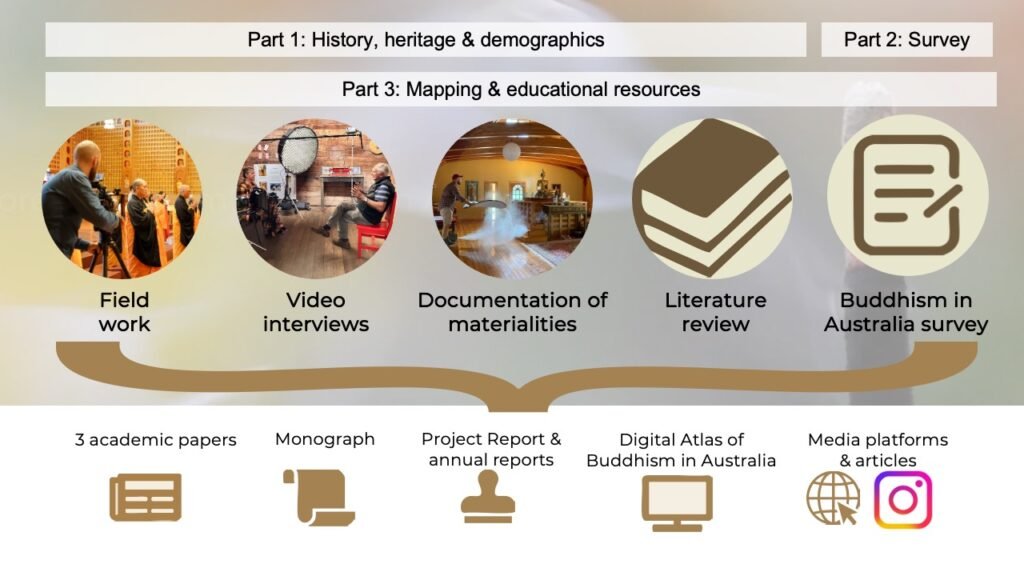
Halafoff explained how the project traces Buddhism in Australia from the early “seeding” of Buddhist ideas, practices and communities to its flourishing diversity today. Using fieldwork, interviews, heritage studies, archival research, and a national survey, the project builds on previous scholarship while placing greater emphasis on northern Australia and centring Asian voices, communities and contributions.
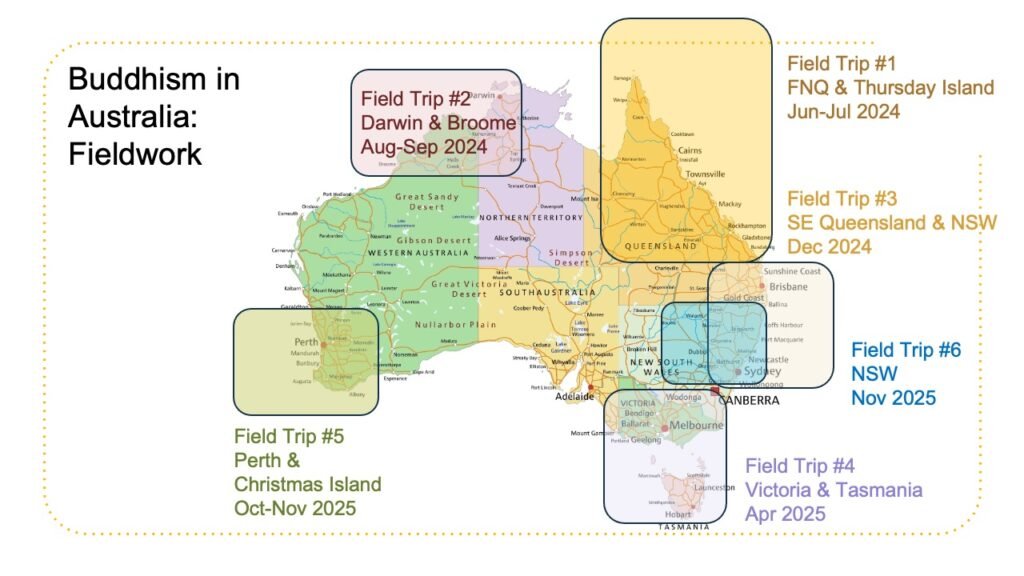
Among the project’s notable findings are the close historical relationships between Indigenous and Asian communities in places such as Thursday Island, Broome and Darwin. Halafoff also highlighted Christmas Island, which has Australia’s highest concentration of Buddhists and a distinctive landscape of Buddhist and Daoist temples, some dating to 1903.
In discussion, Halafoff reflected on characteristics that may distinguish Buddhism in Australia, including ecumenical organisations, mutual support across traditions and between Asian and Western Buddhists, and respect for monastics. These features, she suggested, may reflect Australia’s geographic proximity to Asia and its longstanding interactions with the region.
The Digital Atlas will be launched at Nan Tien Institute on 22 September 2026, along with a set of educational resources and the Project Report.