
Sydney Jongbopsa Korean Buddhist Temple
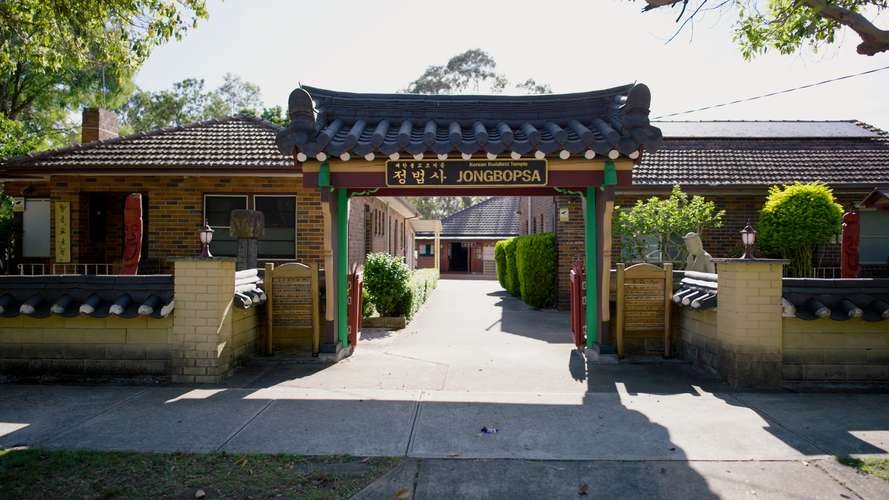
Jongbopsa Korean Buddhist temple, located in Inner West suburb of Belfield (Strathfield South) in Sydney, was established on March 4, 1993. The name 정법사/正法寺Jongbopsa means the Temple of Right Dharma (Jong 정/正- Right; Bop 법 /法- Dharma; Sa 사/- Temple). The temple is affiliated to the Jogye Buddhist Order in Korea and was named by its Founding Abbot, Venerable Kihu (기후/ 基厚).
The beginning of Korean Buddhism in Australia goes further back to 1 April 1981, when the late layperson Lee Moon-woong registered the “Dharma Gaya Society”. In its early years, Korean Buddhist practice was sustained through small, rented facilities across Sydney, including temples such as Hongbeopsa, Bulgwangsa, and Dharmasa in suburbs like Earlwood and Summer Hill. Jongbopsa was established through the integration of Bulgwangsa Temple and Dalmasa Temple.1
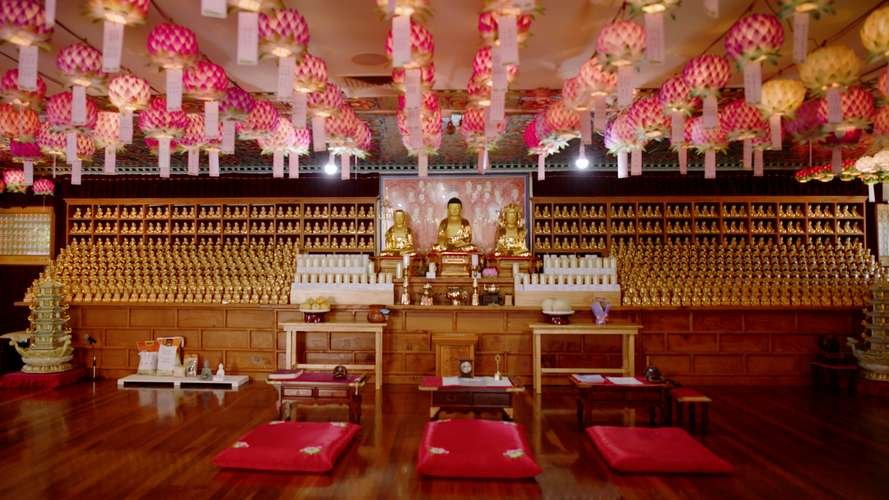
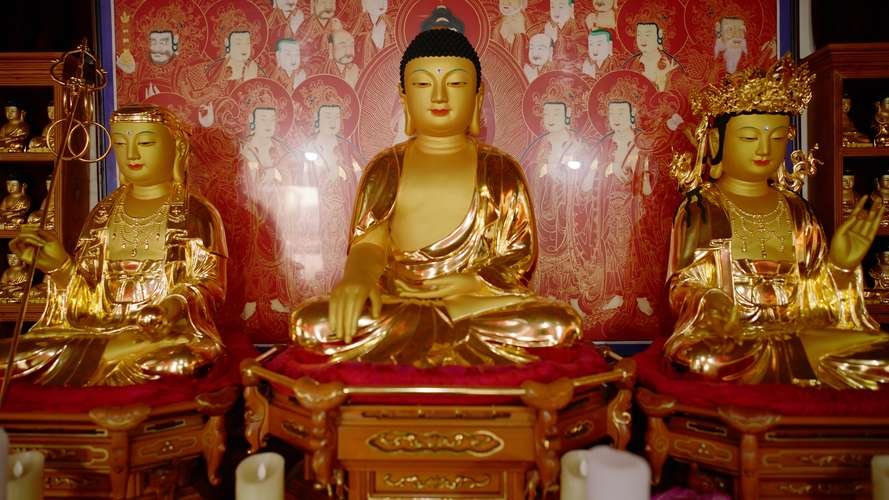
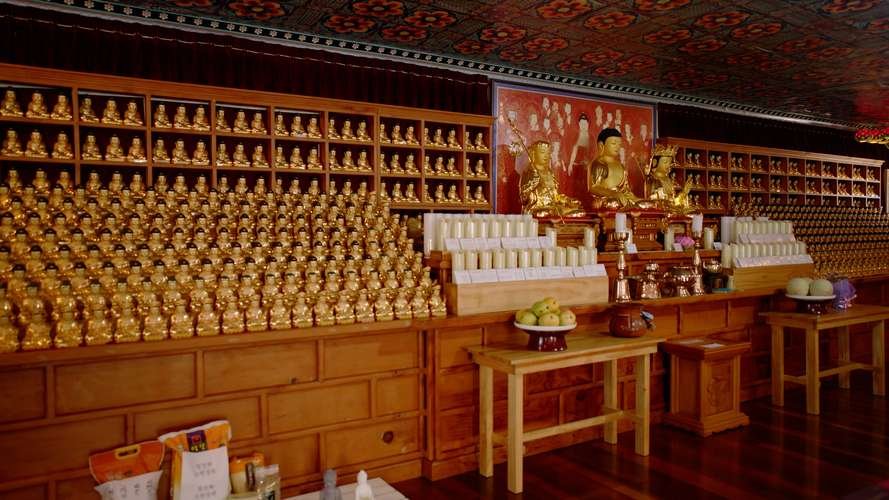
Distinguished by its traditional Korean-style fence, the temple stands apart from the surrounding residential homes on Elliott Street. Passing through the main gate, Iljumun (One-Pillar Gate), visitors are welcomed by a statue of the Pensive Bodhisattva. The temple complex comprises the Main Dharma Hall, a Stupa, a Korean School and Children’s Dharma Hall, a Korean Traditional Cultural Centre, the Octagonal Pavilion, a Welfare Centre, and the abbot’s residence. The temple is sustained through the generosity and volunteerism of a community of monastics and lay Buddhists that call Jongbopsa their spiritual home. There are weekly dharma services, children’s language and dharma classes, youth activities, choir, and yoga classes. Every year, the temple conducts a major Vesak celebration on site to commemorate the birth of the Buddha.
By: Sioh Yang Tan and Juewei Shi
Reference:
1 Sydney Jongbopsa Temple. “Official Website.” Accessed April 8, 2026. http://www.jongbopsa.org.au/; Yang, M. “Religious Activities of Koreans in Australia.” In Hoju Hanin 50-yŏnsa [50-Year History of Koreans in Australia], edited by Hoju Hanin 50-yŏnsa Pʻyŏnchʻan Wiwŏnhoe, vol. 2, Jin Heung Publishing Company, 2008.